How do you know when a gate valve is open or closed
On this page
A gate valve is a type of valve that controls opening and closing by means of a gate and a valve seat. It is mainly composed of a valve body, valve seat, gate, stem, bonnet, stuffing box, gland flange, stem nut, and handwheel. By changing the relative position between the gate and the seat, the flow passage size can be adjusted or completely shut off. To ensure tight shutoff, the mating surfaces of the gate and the seat are lapped.
According to structural configuration, gate valves are generally classified into two types: wedge gate valves and parallel gate valves.
In wedge gate valves, the gate is wedge-shaped, and the sealing surfaces form an inclined angle with the centerline of the flow passage. Sealing is achieved through the wedging action between the gate and the seat during closing. The wedge gate can be designed as a single gate or a double gate.
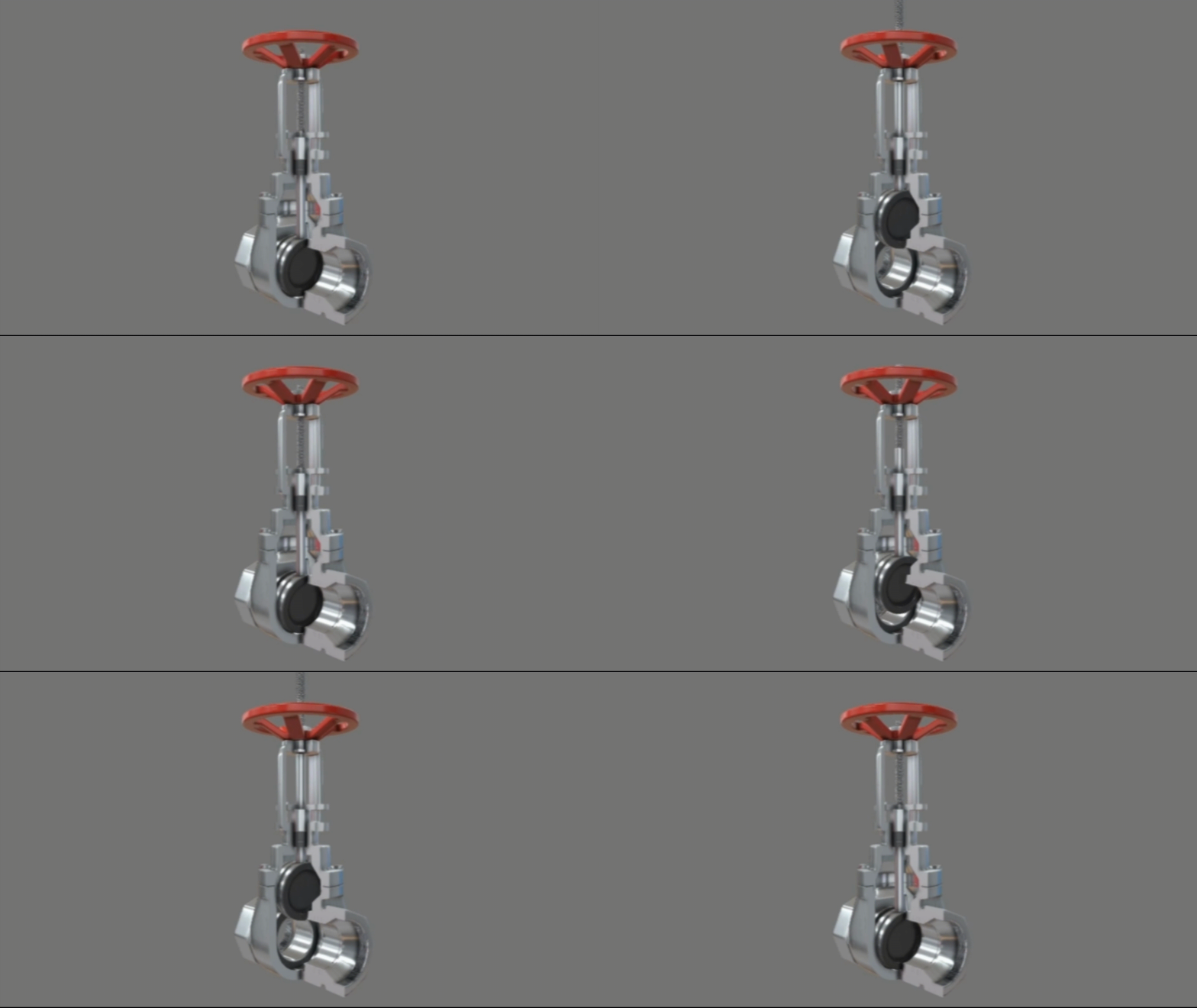
In parallel gate valves, the sealing surfaces are parallel to each other and perpendicular to the centerline of the flow passage. These valves are divided into two types: with spreading mechanism and without spreading mechanism. For double-gate valves with a spreading mechanism, when the gate moves downward, the wedge element forces the two parallel gates apart along inclined surfaces and presses them against the seats to shut off the flow. When the gate moves upward to open, the wedge disengages from the mating surfaces, and after the gate rises to a certain position, the wedge is lifted by the lugs on the gate. For double-gate valves without a spreading mechanism, when the gate slides into position along the parallel seat surfaces, the fluid pressure presses the gate against the outlet side of the valve body to achieve sealing.
Based on the movement of the stem during opening and closing, gate valves are further classified into rising stem gate valves and non-rising stem gate valves. In rising stem gate valves, the stem and the gate move upward and downward simultaneously during operation. In non-rising stem gate valves, the stem only rotates without axial movement, while the gate moves up and down. The advantage of a rising stem gate valve is that the opening position of the flow passage can be determined by the visible height of the stem, although this design requires more installation space. When facing the handwheel or handle, rotating it clockwise closes the valve.
According to structural configuration, gate valves are generally classified into two types: wedge gate valves and parallel gate valves.
In wedge gate valves, the gate is wedge-shaped, and the sealing surfaces form an inclined angle with the centerline of the flow passage. Sealing is achieved through the wedging action between the gate and the seat during closing. The wedge gate can be designed as a single gate or a double gate.
In parallel gate valves, the sealing surfaces are parallel to each other and perpendicular to the centerline of the flow passage. These valves are divided into two types: with spreading mechanism and without spreading mechanism. For double-gate valves with a spreading mechanism, when the gate moves downward, the wedge element forces the two parallel gates apart along inclined surfaces and presses them against the seats to shut off the flow. When the gate moves upward to open, the wedge disengages from the mating surfaces, and after the gate rises to a certain position, the wedge is lifted by the lugs on the gate. For double-gate valves without a spreading mechanism, when the gate slides into position along the parallel seat surfaces, the fluid pressure presses the gate against the outlet side of the valve body to achieve sealing.
Based on the movement of the stem during opening and closing, gate valves are further classified into rising stem gate valves and non-rising stem gate valves. In rising stem gate valves, the stem and the gate move upward and downward simultaneously during operation. In non-rising stem gate valves, the stem only rotates without axial movement, while the gate moves up and down. The advantage of a rising stem gate valve is that the opening position of the flow passage can be determined by the visible height of the stem, although this design requires more installation space. When facing the handwheel or handle, rotating it clockwise closes the valve.